UTEQ is strengthening its international reach: Honduran students will undertake their degree projects on functional foods to improve nutrition in indigenous communities in Central America
Published on 06 from August from 2026
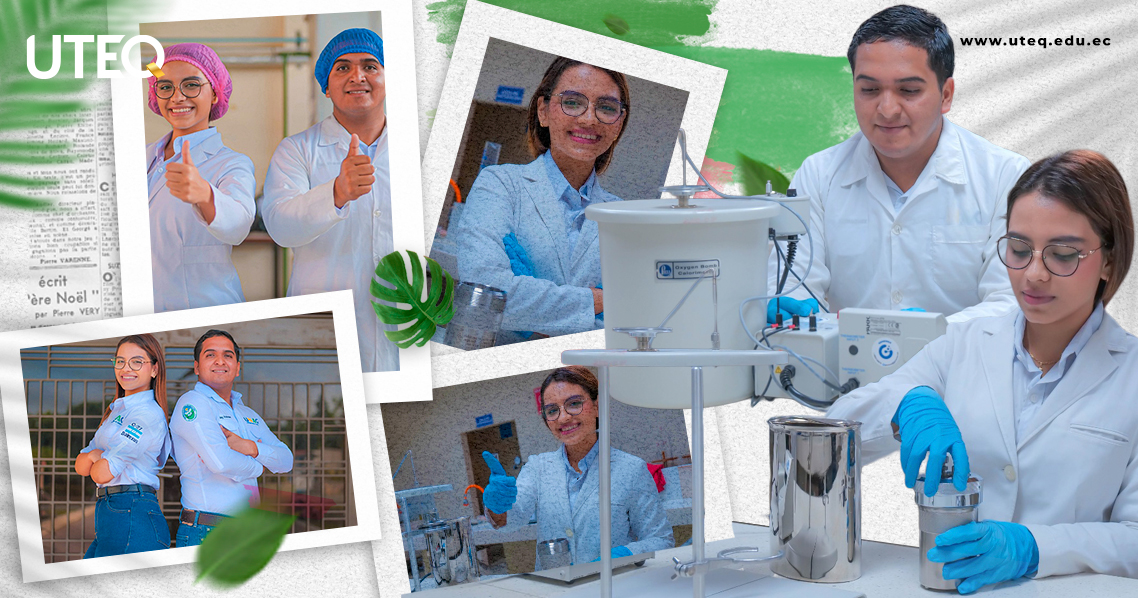
UTEQ’s internationalisation transcends borders through scientific research that brings Ecuador and Honduras together
The Quevedo State Technical University (UTEQ) continues to establish itself as a regional leader in research and internationalisation by hosting two students from the National University of Agriculture (UNAG) in Honduras, who are carrying out the experimental phase of their thesis projects in Ecuador. These projects focus on the creation of functional drinks with high nutritional value, designed to benefit indigenous communities in their country.
The academic visit by Josué Alexander Velásquez Gálvez, originally from the municipality of Lauterique in the department of La Paz, and Angie López, from Tegucigalpa in the department of Francisco Morazán, represents a significant exchange of knowledge between Ecuador and Honduras, strengthening scientific cooperation between the two higher education institutions.
Both students are enrolled on the Food Technology Engineering degree programme at the National University of Agriculture and are undertaking their academic exchange at UTEQ’s Faculty of Industrial and Production Sciences, where they are carrying out the food analysis phase of their research using the scientific and technological infrastructure of the university’s specialised laboratories. Throughout this process, they are receiving academic and scientific support from MSc Loguard Rojas, who is providing guidance and monitoring the progress of their research, thereby enhancing their research skills and fostering the exchange of experiences between the two institutions.
The thesis projects focus primarily on the development of functional drinks made from maize and incorporating ingredients of high nutritional value such as soya, moringa, cocoa and other plant-based protein sources. Whilst the raw materials are prepared and processed in Honduras – particularly the production of the base flours for the formulations – the physical, chemical and food safety analyses are carried out in Ecuador to determine the protein, fat, mineral, ash and carbohydrate content, as well as the energy value, of each formulation.
The ultimate aim of this research is to develop foods with higher nutritional quality that will help improve the diet of the PECH ethnic group, a Honduran indigenous community settled in the departments of Olancho and Colón, where a drink made solely from maize is traditionally consumed as a dietary supplement for children and families.
For Angie López, this research stems from a need identified directly within the communities.
“We observed that this traditional drink had enormous cultural value, but did not fully meet nutritional requirements, especially during childhood. Our aim is to enrich it with plant-based protein sources to support the cognitive and nutritional development of children from the PECH ethnic group.”
Communication